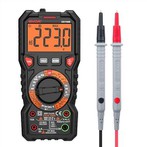
10 Methods for Fault Diagnosis of Multimeters and Other Instruments
1. Percussion hand pressure method
It is often encountered that the instrument runs up and down when it is running, and most of this phenomenon is caused by contact or virtual welding. In this case, tapping and hand pressing can be used. The so-called "knocking" is to gently tap the plug-in board or components with a small rubber hammer or other knocking objects on the parts that may fail to see if it will cause errors or shutdowns. The so-called "hand pressure" means that when a fault occurs, turn off the power and re-press the inserted parts, plugs and seats by hand, and then try to turn on the power to see if the fault will be eliminated. If it is found that it is normal to knock on the case once, and it is not normal to knock again, it is best to reinsert all the connectors and try again. If the brain is not successful, you have to find another way.
2. Observation method
Use sight, smell, touch. Sometimes, damaged components will discolor, blister or burnt spots; burnt out components will produce some special smells; short-circuited chips will become hot; weak soldering or desoldering can also be observed with the naked eye .
3. Exclusion method
The so-called elimination method is to judge the cause of the failure by unplugging and inserting some plug-in boards and devices in the machine. When the instrument returns to normal after a certain plug-in board or device is unplugged, it means that the fault occurred there.
4. Replacement method
5. Contrast method
6. Heating and heating method
Sometimes, the meter works for a long time, or when the temperature of the working environment is high in summer, it will fail. It is normal to shut down and check. This phenomenon is due to the poor performance of individual ICs or components, and the high temperature characteristic parameters cannot meet the index requirements. In order to find out the cause of the failure, the heating and cooling method can be used. The so-called cooling means that when a fault occurs, use cotton fiber to wipe anhydrous alcohol on the part that may be faulty to cool it down and observe whether the fault is eliminated. The so-called temperature rise is to artificially increase the ambient temperature, such as putting an electric soldering iron close to suspicious parts (be careful not to raise the temperature too high to damage normal devices) to see if the fault occurs.
7. Shoulder riding
8. Capacitor bypass method
9. State adjustment method
Generally speaking, before the fault is determined, do not touch the components in the circuit casually, especially for adjustable devices, such as potentiometers. However, if re-referencing measures are taken in advance (for example, the position is marked or the voltage or resistance value is measured before the touch), it is still allowed to touch if necessary. Maybe after a change sometimes the glitch goes away.
10. Isolation method